
Screen Fabric Repair — revitalize your screens
Tears, holes, sagging mesh, and sun-rot let the bugs in and drag your home's looks down. We re-fabric your existing frames with quality mesh — the smart, budget-friendly alternative to replacement.
Torn, sagging or chalky: what is your screen actually telling you?
Florida living happens with the sliders open — that's the whole point of a screened patio. But the moment the fabric tears or pulls loose from its spline, you're choosing between mosquitoes and keeping the door shut. Sun exposure makes it worse every year: UV slowly makes mesh brittle until a light bump from a knee or a paw punches straight through.
Damaged screens also hurt curb appeal — a sagging, patched screen is one of the first things a visitor (or a buyer) notices — and they let wind-blown debris collect in your track, which shortens the life of your rollers too.
Repairing the fabric in your existing frames is expertly done, guaranteed to satisfy, and saves real money over replacement. That's why it's one of our most requested services on the Treasure Coast.
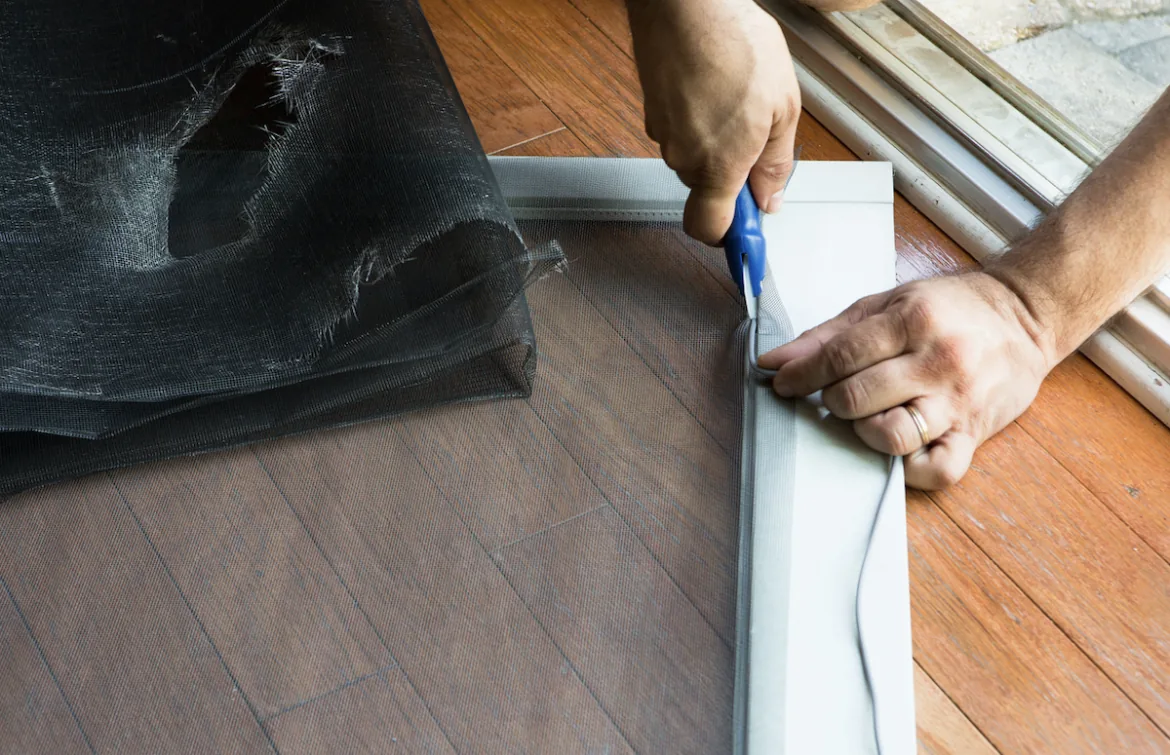
What does a screen re-mesh visit involve, start to finish?
Thorough inspection
We assess the damage — fabric, spline, frame, and rollers — and recommend the right repair strategy.
Expert repair
Old fabric comes out; high-quality mesh goes in, stretched and splined for a drum-tight, wrinkle-free finish.
Precision fitting
The repaired panel is fitted securely back into its frame and aligned so it slides and latches cleanly.
Quality check
Every repair is tested for function and looks before we call it done — satisfaction guaranteed.
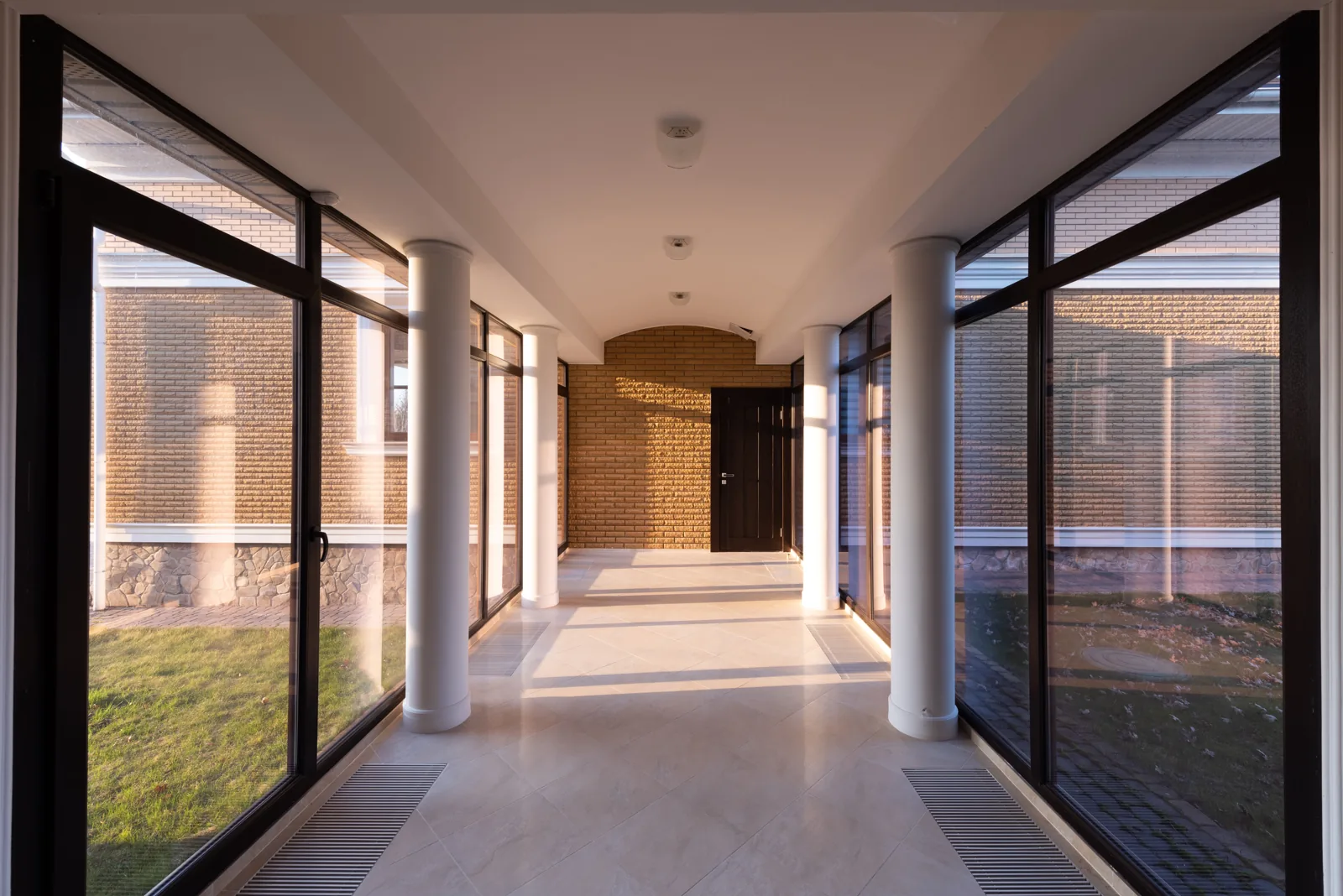
What do you actually get back from a re-meshed screen?
- Improved aesthetics — crisp, taut screens lift the look of the whole lanai.
- Longer screen life — durable modern mesh stands up to Florida sun and daily use.
- Cost-effective — a fraction of the price of replacing frames and panels.
- Comfort restored — open the doors again without inviting every insect in the county.
Screen repair questions, answered
Is it worth repairing a screen instead of replacing the whole panel?
Almost always, yes — it's one of our most popular services for exactly that reason. The aluminum frame of your screen door usually outlives the fabric by decades. Re-fabricing the existing frame with new mesh costs a fraction of a new panel and looks identical when done properly.
What kind of screen fabric do you use?
We fit high-quality fiberglass mesh as standard, and can install heavier pet-resistant or fine no-see-um mesh on request — a popular upgrade near the water, where standard mesh lets the smallest biting insects straight through.
My screen door also drags — can you fix that too?
Yes. Screen doors ride on rollers just like the glass panel, and we service those in the same visit. There's no point fitting fresh fabric to a door that still won't slide.
How long does a re-screen take?
A standard door panel takes well under an hour. We remove the panel, strip the old fabric and spline, fit and tension the new mesh, and re-hang the door — tight, wrinkle-free, and square in the frame.
Why does Florida screen mesh fail years before it should?
Every competitor will tell you Florida is hard on screens. Almost none of them will tell you why, so here is the mechanism.
Standard screen fabric is glass fiber strand coated in vinyl. The glass strand does not care about sunlight. The coating does. Ultraviolet light breaks the polymer chains and drives the plasticizer out of them, so a coating that started flexible turns chalky and rigid. Run your thumb along a five-year-old lanai screen and you get a gray-white powder on your skin. That powder is the coating leaving. Once it is gone the strands cannot flex, so the next knee, elbow or dog nose splits the weave instead of bouncing off it.
Salt speeds this up in a way humidity alone does not. Salt is hygroscopic: it pulls water out of humid air and holds it. A screen a mile from the water is therefore damp for far more hours a year than the rain gauge suggests, and that damp salt film sits in the weave working on the coating around the clock. It is the same reason hardware corrodes faster near the beach than the annual rainfall would predict.
Then there is the failure that gets misread as a tear. The spline, the vinyl cord that presses the mesh into the groove around the frame, loses its plasticizer on exactly the same schedule. It hardens, shrinks a fraction, and its grip relaxes. The mesh creeps out of the channel at a corner and the panel sags. Nothing is torn. The frame simply let go of the fabric.
Add constant sea breeze flexing the fabric thousands of times a day and you get the pattern we see on the barrier islands: standard mesh failing on a two-to-three-year cycle where the same fabric lasts a decade inland.
Re-screen or replace the panel? The four checks we run first
A screen panel is an aluminum rectangle with a groove around it. It is worth re-meshing until the rectangle stops being a rectangle. Four checks settle it, and you can run all four yourself in about two minutes.
- Is the frame square? Measure corner to corner both ways. If the two diagonals differ by more than roughly an eighth of an inch, the panel is racked and fresh mesh will pull it further out of shape.
- Are the corner keys sound? Corner keys are the L-shaped inserts inside each corner holding the two extrusions together. Grip the panel at a corner and twist gently. Movement, a creak or a visible gap opening at the miter means a broken key or aluminum that has split at the crimp.
- Is the spline groove intact? Look into the channel the mesh sits in. Crushed walls, a split lip or a groove that has been widened by repeated re-screening gives new spline nothing to bite on, and the mesh will creep out again within a season.
- Does the panel still track? A screen door rides on its own rollers. If it drags, tips or jumps out at one end, the mesh is not your problem yet.
Pass all four and re-screening is the obvious call: the frame outlives its fabric by decades, so you are replacing the part that wore out and keeping the part that did not.
Sometimes replacement genuinely wins, and we will say so. Aluminum that has corroded to a powdery, chalk-soft finish has lost its structural section and will not hold spline tension. More than one failed corner on an old discontinued extrusion is usually not worth chasing. And a panel with a deep dent through the bottom rail will never track properly again, however good the mesh in it is. Paying us to re-screen any of those is money you will spend twice.
Mesh options and what each one trades off
Mesh is described by openings per inch, and the number is the whole story.
- 18x14 standard fiberglass. The default on almost every Florida door. It was specified decades ago around mosquitoes and houseflies, and it stops both comfortably.
- 20x20 no-see-um mesh. The tighter weave physically excludes biting midges, which walk through standard screening at around a millimeter long. It costs you a measurable amount of airflow and reads slightly hazier looking into bright light.
- Pet-resistant mesh. Vinyl-coated polyester in a much heavier strand. It survives paws, beach chairs and children. The weave is visibly chunkier, so most people use it low and something finer at eye level.
- Solar mesh. Blocks a large share of solar heat before it reaches the porch. It darkens the view noticeably, so it is a comfort decision for a west-facing lanai rather than a default.
- Heavy-gauge 18x14. Same insect performance as standard, much better resistance to wind-flex fatigue. The quiet upgrade for breezy island porches.
Mixing meshes on one enclosure is normal and sensible: fine mesh on the panels you actually sit beside at dusk, tougher fabric where animals and furniture hit. Our no-see-um mesh guide works through the 20x20 versus 18x14 decision in detail.
Tell us which panels you sit next to at dawn and dusk, which ones take the dog, and how exposed the porch is, and we will talk through what suits before anything is ordered or fitted.
What a new screen won't fix: frames, rollers, tracks and corner keys
Fresh mesh on a tired panel is the most common wasted repair in this trade. It looks right for a week and then the original complaint comes back, because the mesh was never the cause.
Here is what new fabric does not touch:
- A screen door that drags or jumps. That is rollers, a bent bottom rail or a track full of grit. Screen door rollers are small, cheap and almost always serviceable, and they age on roughly the same schedule as the fabric, which is why we look at them during a re-mesh.
- A latch that no longer catches. Usually the panel has dropped or racked, so the strike and the latch are no longer at the same height.
- Insects still getting in. After a re-screen this is nearly always a gap around the panel rather than through it. Check the top and bottom rails, the interlock where the screen meets the jamb, and whether the weather pile, the fuzzy strip along the edge, has worn away to nothing. A one-eighth-inch gap at the jamb defeats the finest mesh made.
- Debris in the main door track. A torn screen lets wind-blown sand and leaf litter into the sliding door track below, where it becomes an abrasive paste under the rollers of the glass panel. That is a track and roller problem, and re-screening only stops it getting worse.
If your real complaint is a heavy or noisy glass panel rather than a torn screen, start with roller replacement or the seven signs your rollers are done instead.
Do you need HOA or condo approval to re-screen a balcony screen?
Often, yes, and it is worth ten minutes of checking before anyone touches the panel.
Florida condominium documents divide a building into the unit, the common elements and the limited common elements. A balcony, and usually everything attached to it, tends to land in that third category: yours to use exclusively, but part of the building's exterior appearance. Because a screen is visible from outside, associations frequently specify mesh color, and sometimes mesh type, so that the elevation reads uniform from the parking lot. Charcoal is the usual house standard. Fitting a lighter mesh on one balcony out of forty is exactly the sort of thing that generates a letter.
In a single-family HOA the rules are usually looser for screens than for glass or frames, but pool enclosures and cages are often covered by the architectural guidelines even when door screens are not.
The practical sequence: find the maintenance and alterations clauses in your declaration, ask your manager in writing what mesh specification the building uses, and keep the reply. A written answer costs nothing and it is the difference between a repair and a dispute. Our guide to who pays for a condo slider, the owner or the association, walks through the vocabulary and the four clauses worth finding.
We work in association buildings across Jensen Beach, Fort Pierce and Stuart as routine, and we are happy to deal with a property manager directly when the owner is not in town.
Screens on a snowbird schedule: leaving in May, coming back in November
A screen does not stop aging because the house is empty. It ages on the sun's schedule, not the occupancy schedule, and the six months you are away are the six months that do the damage: the highest UV, the highest heat in the frame, and the summer storms that push debris through anything already weakened.
Two things go wrong in an empty house specifically. Spline shrink is worst in summer, because heat accelerates the plasticizer loss, so a panel that was tight in April is often the one sagging out of its groove in November. And a small tear left open all summer lets wasps, lizards and blown leaf litter into the enclosure and down into the sliding door track, where it packs solid. Owners then arrive to two jobs instead of one: a screen to re-mesh and a glass panel that has been grinding on debris since June.
The sequence that works is simple. Have screens checked at close-up rather than open-up. A re-mesh done in May means you land in November to a porch you can use that evening, instead of waiting on a repair in the busiest month of our year. If that timing has already passed, book the open-up visit before you fly rather than after you land.
The same logic applies to rental turnovers. Our checklist for Florida rentals and seasonal homes sets out the 90-second check to hand to whoever opens the property, and an annual maintenance visit covers every slider and screen in the house in one trip.
What changes the price of a screen repair?
Five things move the number, and none of them is a mystery.
- Panel size. Mesh is sold by roll width. A panel wider than a standard roll needs the next width up, which is a step change rather than a gradual one, so an oversized lanai panel can cost more than its extra square footage suggests.
- Mesh choice. Standard fiberglass is the cheapest fabric made. No-see-um, pet-resistant and solar meshes cost more per foot, and on a single door the difference is usually small enough to be worth it.
- How many panels. The setup, the trip and the tooling are the same for one panel or six, so per-panel cost falls sharply once we are already there. Doing the whole enclosure in one visit is nearly always cheaper than doing it a panel at a time over two years.
- Frame work. Corner keys, a dressed spline groove or a straightened bottom rail add labor. This is also the point at which we tell you whether the panel is worth the work at all.
- What else needs doing. Screen door rollers and latches age with the fabric, and servicing them while the panel is out costs a fraction of a separate visit.
Repairs start at $275, and that figure includes parts, labor and a one-to-three-year warranty on both. We quote the panel in front of us rather than a category, because a chalky ten-year-old lanai screen and a fresh tear in a two-year-old door are not the same job. Our Florida repair cost guide covers what a complete, itemized estimate should contain and the questions worth asking any company quoting you.
Where we repair sliding screen doors across the Treasure Coast
SliderPro is based in Port St. Lucie and works the coast from Vero Beach down to Palm Beach Gardens. Screens are the one repair where your address genuinely changes the answer: mesh on a Jensen Beach or Hutchinson Island balcony fatigues on a two-to-three-year cycle in constant sea breeze, while the same fabric on an inland Palm City lanai can run most of a decade.
We re-mesh sliding and patio screens in Port St. Lucie, Fort Pierce, Stuart, Jensen Beach, Palm City, Port Salerno, Hobe Sound, Vero Beach, Jupiter and Palm Beach Gardens. The full list, with what each area does to a door, is on our service areas page.
Call 772-722-4036 for the Treasure Coast or 561-566-2855 for Palm Beach County, or send us the details and tell us how many panels you have. Same-day service is available, and 96% of our jobs are finished in a single visit.
Screens seen better days?
Free consultation and quote — we'll tell you honestly whether a re-fabric or a new panel makes more sense.